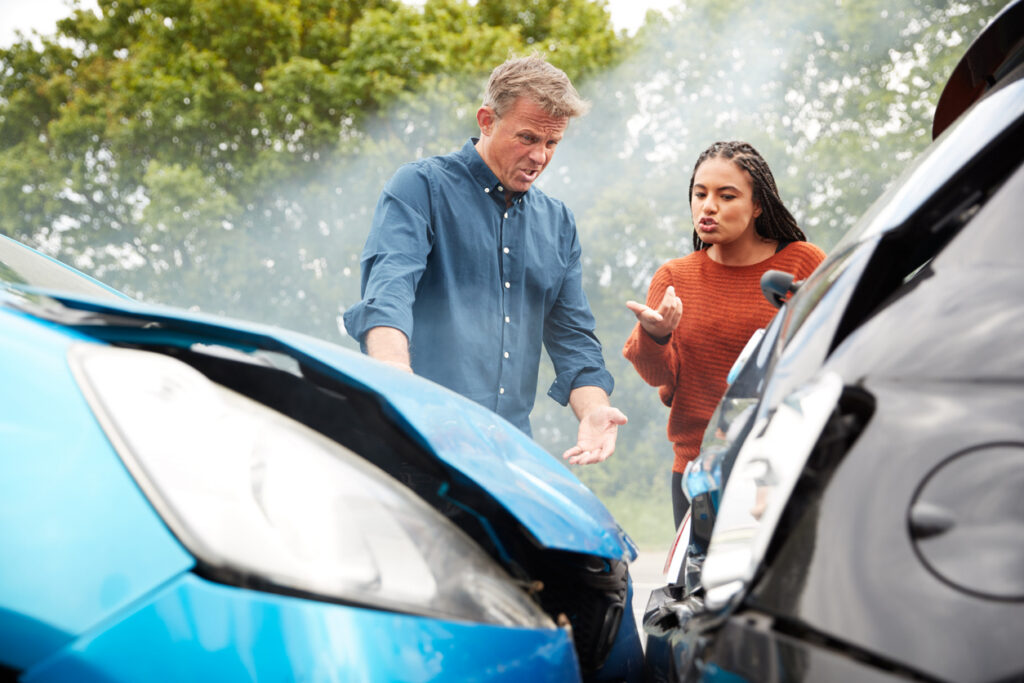
A crash becomes more complicated when the person who caused it has no liability insurance. Medical bills, vehicle repairs, lost income, and other losses do not disappear simply because the responsible motorist failed to carry coverage. For someone hurt by an uninsured driver, Washington state law still leaves several possible paths to compensation.
Walton Injury Law represents injured people in Bellingham and throughout Whatcom County. We help clients identify available insurance, document losses, and respond when their own carrier questions a claim. Being on the receiving end of an uninsured driver can be frustrating, but our car accident attorneys can help sort through the policy language and determine which coverage may apply.
Washington’s At-Fault Insurance System and Mandatory Coverage Laws
Washington generally places financial responsibility for a collision on the person whose negligence caused it. In a typical insured crash, the injured person presents a liability claim to the responsible driver’s insurance company and seeks payment for covered losses. Fault questions can turn on details as specific as who is at fault in a rear-end accident, and those same fault principles still apply when the responsible driver turns out to have no insurance.
RCW 46.30.020 requires most Washington motorists to maintain liability insurance or another recognized form of financial responsibility. The minimum liability limits are commonly expressed as follows:
- $25,000 when one person suffers an injury or dies
- $50,000 when two or more people are hurt or die in a single crash
- $10,000 for property damage
Those requirements do not mean every driver follows the law. Some motorists drive without active insurance. Others have a policy that has lapsed, excludes the specific driver, or provides too little coverage to cover a serious injury. Uninsured drivers can turn up anywhere, including many of the locations where car accidents most often occur in Bellingham.
Fault Still Matters When Insurance Is Missing
The absence of insurance does not erase responsibility for causing the crash. The at-fault driver can still be legally responsible for injuries and property damage.
The practical problem is collection. Liability insurance typically covers the costs of resolving a claim. When no policy is available, the injured person must look more closely at personal assets, their own insurance, or other potentially responsible parties.
What Happens When You Are Hit by an Uninsured Driver?
The first challenge is often financial. An ambulance bill, emergency room charge, repair estimate, or missed paycheck may arrive long before anyone determines how the loss will ultimately be paid.
A collision with an uninsured driver in Washington state does not automatically mean the injured person must cover all expenses. Coverage already purchased through the injured person’s own policy may become important.
Start with the policy summary and then read the full contract. The summary usually identifies the coverages and dollar limits purchased for the vehicle, while the complete policy contains the definitions, exclusions, notice rules, and claim conditions that can affect payment.
A Personal Judgment Does Not Guarantee Collection
An injured person could potentially file a lawsuit against the driver who is to blame for the accident. A court award establishes what is owed, but it does not create money or assets where none are available.
A driver with little income and few nonexempt assets may have limited ability to satisfy a substantial judgment. Wage garnishment or other collection tools may be available in some circumstances, but collection can take time and may yield only a portion of the amount owed.
Bankruptcy can also affect collection rights depending on the nature of the debt and the facts surrounding the crash. That is one reason lawyers often examine insurance options before assuming a direct lawsuit against an uninsured person will solve the financial problem.
How Uninsured/Underinsured Motorist (UIM) Coverage Works in Washington
Uninsured and underinsured motorist coverage is designed for situations in which the responsible driver has no usable liability insurance or insufficient coverage to cover the loss. The policy may also address certain hit-and-run or unidentified-vehicle events, depending on the facts and policy terms.
With uninsured motorist coverage, WA drivers purchase, the injured person files the claim under their own policy. The carrier then evaluates issues such as fault, medical causation, the amount of damages, and the applicable policy limits.
That does not make the claim automatic. Your insurer may ask for medical documentation, wage-loss records, crash evidence, or other proof before agreeing to pay.
UIM Can Apply When Some Insurance Exists
The “underinsured” part of UIM is important. A responsible driver may technically have insurance but carry limits that are too low for a serious injury.
Suppose a collision causes extensive medical treatment and long-term wage loss, but the responsible driver’s liability policy is exhausted before it covers all damages. Depending on the policy and circumstances, uninsured motorist coverage carried by WA motorists may provide an additional source of recovery.
Policy language matters. Limits, offsets, exclusions, notice provisions, and consent requirements can affect how the claim is handled.
Where Personal Injury Protection Fits In
Personal Injury Protection, usually called PIP, works differently from UIM. PIP can pay certain accident-related benefits without first deciding who caused the collision.
Washington’s Office of the Insurance Commissioner explains that PIP can help with medical and hospital costs, wage loss, replacement services, and funeral expenses, depending on the amount of coverage purchased and the policy conditions. Insurers must offer PIP for standard auto policies, and a customer who does not want it generally must reject it in writing.
PIP may, therefore, help with immediate expenses while liability and UIM issues are still being investigated.
PIP and UIM May Serve Different Parts of the Same Claim
PIP is often used early because it can address covered medical bills and certain wage losses without waiting for a final fault decision. UIM focuses on damages tied to a driver who lacked enough liability coverage.
Please do not treat the two coverages as interchangeable. Coordination may be necessary to ensure that bills, reimbursements, and final settlement calculations are handled correctly. A lawyer can review both portions of the policy and explain how they may interact in a particular crash.
Hit-and-Run Claims Need Prompt Attention
Some uninsured claims arise because the responsible motorist leaves the scene or cannot be identified. Washington insurance guidance also recognizes certain situations in which an unidentified vehicle causes another driver to crash without making physical contact.
Washington’s Office of the Insurance Commissioner advises people making a claim involving a phantom vehicle to report the incident to law enforcement no later than 72 hours from when the accident took place. Witness information can also become especially important when there was no physical contact between the vehicles.
That reporting issue is separate from the general civil filing deadline. Waiting can make an already difficult proof problem worse.
Can You Sue an Uninsured Driver Personally in Whatcom County?
Yes. Lack of insurance does not shield the driver from civil responsibility. A lawsuit can seek damages from the person who caused the collision.
The harder question is whether you can actually collect a judgment. A Bellingham uninsured driver lawyer may investigate available assets, employment, undisclosed insurance, and whether another person or business could share responsibility.
For example, an employer may be relevant if someone was driving for work. A vehicle owner may also need a review depending on the circumstances. Those possibilities are fact-specific and should not be assumed simply because the negligent driver lacked insurance.
The Three-Year Filing Period Still Matters
RCW 4.16.080 generally sets a three-year filing period for Washington personal injury actions. The lack of insurance does not pause that ordinary deadline. Insurance negotiations can consume months, particularly when UIM coverage is disputed. Your attorney will track the filing deadline while addressing coverage questions.
Key Steps to Take After an Accident with an Uninsured Driver in Bellingham
A driver’s statement that “I don’t have insurance” should not end the investigation. Coverage information can be incomplete at the scene, and additional policies may exist.
When circumstances allow:
- Call law enforcement and obtain identifying information for the other driver: Ask for the driver’s name, contact information, license plate number, driver’s license details, and any insurance information they provide. A police response can also create an official record of the collision.
- Seek medical attention for injuries: Some symptoms may not be obvious immediately after a crash. A medical evaluation can protect your health and document injuries connected to the accident.
- Photograph the vehicles, roadway, damage, and relevant surroundings: Include vehicle positions, skid marks, debris, traffic signals, road conditions, and anything else that may help explain how the collision occurred.
- Collect contact information from witnesses: Independent witnesses may provide useful information if the fault becomes disputed later.
- Notify your own insurer that a collision occurred: Prompt notice may be required under the policy, especially when uninsured or underinsured motorist coverage could apply.
- Save medical bills, repair estimates, wage records, and insurer correspondence: These records can help document the financial effects of the crash.
- Avoid making assumptions about fault or coverage in a detailed recorded statement before the facts are clear: Early statements can create problems when the injured person does not yet have complete information about the accident, injuries, or available insurance.
Get the Police Collision Information
An officer’s report may contain driver identification, insurance information, witness details, and observations from the scene. It can also help establish that the crash was reported promptly.
A police report does not automatically decide civil fault. It is one piece of a larger record that may include photographs, medical documentation, video, and witness statements.
Your Own Insurance Company Will Still Evaluate the Claim
Many people assume their own insurer will simply pay a UIM claim because they have been paying premiums for the coverage. The relationship is more complicated once the insured asks the company to pay damages.
The carrier can investigate liability, challenge the link between the crash and specific medical treatment, and dispute the value of the claimed losses. It may also interpret policy provisions differently from the insured.
That is why a claim under uninsured motorist coverage that WA motorists purchased can become contested even though it is being made against their own policy.
Recorded Statements and Medical Requests Deserve Care
Insurers may request a recorded statement or medical information. The policy usually requires some cooperation, but the scope and timing of those requests can matter.
A person who is still in pain or does not yet understand the circumstances of the accident may give an incomplete description. Broad medical requests can also create questions about information unrelated to the collision.
A Bellingham uninsured driver lawyer can review those requests and help keep the claim focused on the evidence relevant to the crash.
What Damages May Be Included in an Uninsured Motorist Claim?
Available damages depend on the policy and the underlying collision, but a serious injury claim may involve several categories of loss.
Medical expenses can include emergency treatment, imaging, follow-up physician care, therapy, medication, surgery, and future care. Lost income may include time already missed and reduced future earning ability.
Property damage requires separate attention because coverage may come through collision insurance, UIM property-damage protection, or another part of the policy. Pain, physical limitations, and other non-economic effects may also be part of the injury claim when supported by the facts.
The Policy Limit Can Set a Practical Ceiling
Even a well-documented claim is affected by available insurance limits. A person with relatively low UIM limits may not have enough coverage for a catastrophic injury.
Reviewing the policy summary early helps establish the amount of protection purchased. It can also show whether multiple vehicles, policies, or other coverage questions require further analysis.
Why You Need a Bellingham Personal Injury Attorney for UIM Claims
A crash caused by someone without insurance creates two separate problems: proving responsibility and finding a realistic source of payment. The at-fault driver remains responsible, but the injured person’s own policy may provide the most practical route to compensation.
Walton Injury Law represents people injured by uninsured and underinsured motorists in Bellingham and throughout Whatcom County. We review available policies, document medical and financial losses, and address disputes with insurance companies.
Contact us online for a free consultation with an uninsured driver lawyer in Bellingham. We will be happy to answer your questions about an uninsured driver in Washington state, a collision, or the uninsured motorist coverage WA benefits available under your policy.